
 Personal Account
 Personal Account
- Main /
- Company /
- 641-mercury

Mercury
Financial Infrastructure for Businesses
Company websiteOTC.MRRY
$$5,2 млрд (Series D, май 2026)
2017
Current offer
About
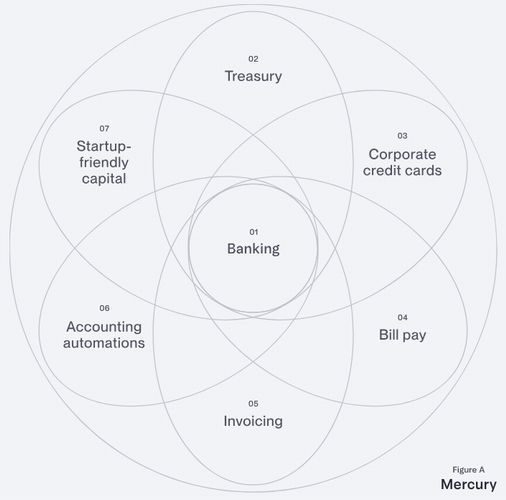
Mercury was established with the mission of improving banking for startups. As an online bank, Mercury offers business banking services such as virtual debit cards and software to connect bank accounts with payment processors. The company's aim is to empower businesses by providing a zero-fee banking stack, which includes a business checking and savings account.
Prior to the collapse of Silicon Valley Bank (SVB) in March 2023, Mercury was primarily recognized for offering startups business banking solutions and venture debt. Following SVB's collapse, Mercury adopted a new role as a startup savior. Within a weekend, the company launched Mercury Vault, a new product providing $5 million in FDIC insurance through partner banks and their sweep networks, which transparently distribute deposits across multiple banks to increase FDIC insurance coverage.
As SVB was faltering, 8,700 new customers transferred over $2 billion in deposits to Mercury. These customers remained loyal, quadrupling Mercury’s annualized revenue run rate and setting the company on a path to nearly double its transaction volume for the year. Additionally, YC graduates continue to choose Mercury for their banking needs, with over 50% of each cohort signing up.
Investors
Sapphire Ventures,
CRV,
Chapter One Ventures,
Homebrew,
Caffeinated Capital